

Why the Smartest AI Strategy Builds on What You Already Have


Throughout this series, we've explored why planning speed has become the defining competitive advantage in modern supply chains and the architectural capabilities required to support AI at enterprise scale.
The next question is one every supply chain leader eventually faces:
Do we need to replace our planning systems to take advantage of AI?
For many organizations, the assumption is yes. New technology waves have traditionally required large implementation projects, years of migration work, and significant organizational disruption before delivering value.
Fortunately, AI does not have to follow that pattern in all cases.
The organizations seeing the fastest results are not replacing the systems they already own. They are adding an intelligent layer above them, allowing AI to reason across existing data, automate complex work, and accelerate decision-making without forcing a complete technology and process overhaul.
That approach delivers value faster while protecting years of investment.
Your Existing Systems Still Have Value
Most enterprise organizations have spent years building their supply chain technology landscape.
ERP platforms manage financial transactions and core business processes. Planning systems generate forecasts and supply plans. Manufacturing systems execute production. Transportation systems manage logistics. CRM platforms connect customer demand with commercial operations.
These systems were significant investments, and many continue to perform the jobs they were designed to do.
The challenge is not that they stopped working.
The challenge is that the pace of today's business has outgrown the speed at which those systems were designed to make decisions and any action taken typically requires a person or many people in the loop.
Replacing every application rarely solves that problem. It often introduces years of cost, complexity, and organizational risk before meaningful value is realized.
AI Should Expand Your Existing Investment
The most effective AI strategies treat existing systems as sources of operational intelligence and data, not obstacles to modernization.
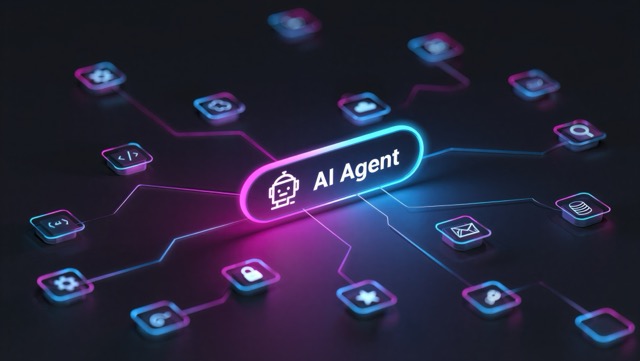
Instead of rebuilding the entire technology stack, organizations can look to introduce digital agents that work across the systems already in place.
These agents investigate exceptions, evaluate scenarios, gather information, perform analyses, and recommend and take actions using live operational data from across the entire business landscape.
Rather than asking planners to manually collect information from multiple applications, AI brings the information together, reasons across it, and delivers recommendations and can act as required while being fully governed.
That allows organizations to improve decision-making immediately while continuing to leverage the investments they've already made.

Augmentation Creates Faster Time to Value
Technology replacement projects often require organizations to wait years before seeing measurable business outcomes.
AI changes that equation.
Because digital agents operate above existing planning environments, organizations can begin solving high-value business problems without waiting for a complete system replacement.
A planner investigating a supplier disruption does not need a new ERP.
A sales executive asking whether a customer order can be fulfilled does not need an entirely new planning platform.
An operations leader evaluating inventory risk does not need to rebuild years of business processes.
They need faster answers or in many cases action that can be taken automatically.
That is what augmentation delivers.
By adding intelligence rather than replacing infrastructure, organizations can improve planning speed, increase productivity, and begin generating measurable business value in weeks instead of years.
Digital Agents Become the New Decision Layer
As AI continues to mature, the role of enterprise software is beginning to change.
Traditional applications remain systems of record. They store transactions, execute business processes, and maintain operational data.
Digital agents become the system of reasoning.
They understand business context, evaluate tradeoffs, learn, coordinate work across multiple systems, and continuously help people not only make better decisions but also get to where they can focus on the problems that truly demand their attention.
At ketteQ, Quintus™ digital agents were built specifically for this role.
Powered by Free-Range AI™. Fully Governed., Quintus™ reasons across existing ERP and supply chain planning environments, executes actions, learns new skills, and helps organizations respond to changing conditions without requiring a rip-and-replace implementation.
Instead of forcing organizations to choose between legacy investments and AI innovation, Quintus™ allows them to benefit from both.
The Future Is Evolution, Not Replacement
Enterprise technology has always evolved in layers.
Companies did not replace every business application when cloud computing arrived. They extended existing capabilities.
The same is happening with AI.
The organizations moving fastest are not waiting for the perfect technology landscape before adopting AI. They are building intelligence on top of the systems they already own, creating immediate business value while preparing for long-term modernization.
The future belongs to organizations that can combine the stability of proven enterprise systems with the adaptability of intelligent digital agents.
That is how AI becomes more than another software feature.
It becomes the decision layer that helps the entire supply chain move faster.
Read the Complete Guide
This concludes our three-part series on the future of Free-Range AI™ for supply chain. To learn how organizations are deploying AI above existing systems, explore the architectural principles behind digital agents, and see how leading companies are accelerating decision-making with fully governed AI, download The CSCO's Guide to Free-Range AI™ for Supply Chain.

Learn More
- Blog 1: Your Supply Chain Has Always Been Complex. Now Your Planning Capabilities Are Too Slow for the AI Era.
- Blog 2: 4 Requirements Every Free-Range AI™ Supply Chain Platform Must Meet
About the author
Related articles

ketteCrew Spotlight: Embracing the Next Era of Planning with Ken Wardlaw
ketteCrew Spotlight: Embracing the Next Era of Planning with Ken Wardlaw