6 Big Takeaways from the 2025 Gartner Supply Chain Planning Summit


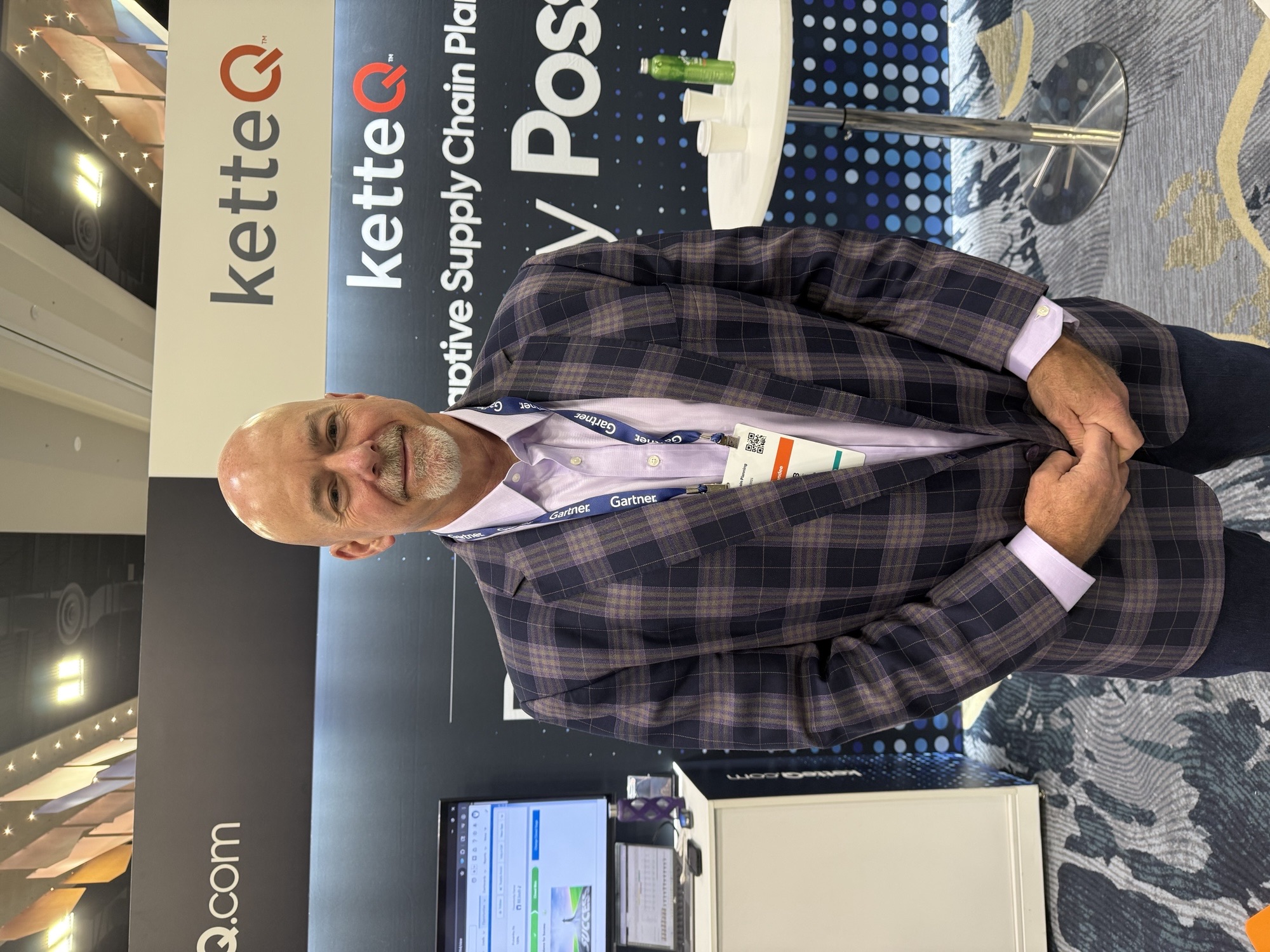
It has been a few years since I last attended the Gartner Supply Chain Planning Summit in person, but the themes emerging from this year’s event stopped me in my tracks. The conversation has clearly evolved from optimization to transformation, from accuracy to adaptability, and from incremental improvement to intelligent automation.
When I last sat in those sessions, the focus was on digital transformation and system integration. This year’s discussions reflected a new reality. We have entered the era of adaptive planning, where intelligence, speed, and collaboration are the defining factors of success.
Here are the six big takeaways that stood out from the 2025 Summit and why they matter for the next generation of planning leaders.
1. Capturing ROI from Legacy Planning Systems
One of the most compelling discussions came from our panel featuring Tony Balliro, Vice President of Global Supply Chain at Zeus; Philipp Bruckner, Global Business Process Owner at Partner in Pet Food (PPF); and Mike Landry, CEO of ketteQ.
Philipp shared how PPF is unlocking new levels of value from its existing planning systems by layering ketteQ’s PolymatiQ agentic AI engine on top, without a costly rip-and-replace. The result is faster ROI, richer scenario analysis, and adaptive planning capabilities that extend the life and performance of their legacy tools.
This message directly addressed one of the most urgent themes we heard throughout the Summit: many manufacturers feel stuck in planning systems that no longer deliver the results they need, but they cannot afford, justify, or risk a painful, multi-year replacement project.
It doesn’t help that Gartner repeatedly acknowledged a hard truth: nearly 90% of APS implementations fail to deliver the results companies expect. The industry knows this. Leaders feel it. Many have lived it.
That’s why the conversations around layering innovation resonated so strongly. Companies were relieved to learn that they don’t have to rip out their ERP or retrain their entire planning organization to achieve better outcomes. ketteQ’s PolymatiQ solver agents sit on top of the planning platform they already own with no change to the user interface, no new learning curve, no process redesign, no ERP reintegration. Just better results delivered in as little as 4–8 weeks.
At the Summit, we spoke with dozens of companies that felt stuck with their legacy tools and lacked a vision for applying AI. They were genuinely surprised to learn that they could improve planning accuracy, responsiveness, and decision quality without a disruptive transformation effort, and that we can prove the impact using their own data before they ever make a purchase.

2. From Optimization to Transformation
Across industries, planning leaders are rethinking what success looks like. Incremental improvement is no longer enough. Gartner analysts emphasized that supply-chain planning must now enable step-change transformation that connects visibility, financial impact, and strategic growth.
Transformation does not mean tearing everything apart; it means reassembling it. It means re-imagining how decisions are made and measured. The best planning leaders are not just improving forecast accuracy by a percentage point; they are redesigning how decisions create enterprise-wide value.
When I attended earlier Summits, transformation was still a distant aspiration. Now it has become the standard by which progress is measured.
Optimization makes you efficient. Transformation makes you relevant.
3. Agentic AI and Autonomous Planning: From Hype to Real Value
AI once felt like the promise of the future. At this year’s Summit, it felt like the foundation of the present. Sessions focused on the rise of agentic AI in planning and how autonomous agents are being used to evaluate trade-offs, run thousands of scenarios, and deliver prescriptive actions that drive measurable results.
The message was clear: avoid the hype and focus on value. AI is no longer experimental. It must be deployed with discipline, governance, and a clear path to ROI.
This year’s discussions also hinted at the next frontier: connecting supply-chain intelligence directly into CRM environments. As agentic AI evolves, we are witnessing the emergence of Supply Chain Intelligence for CRM, where intelligent agents facilitate planning decisions that result in customer commitments. It is the bridge between customer promise and supply execution.
That concept is at the heart of ketteQ’s Oslo Release, where the PolymatiQ™ engine extends its agentic AI capabilities beyond traditional planning systems to interact directly with CRM data, creating a single intelligent environment for planning and customer collaboration.
The most innovative organizations are not chasing full autonomy. They are building human-AI partnerships that deliver measurable value today.
4. Resilience and Agility Are Now Design Principles
Volatility is no longer the exception; it is the environment. From supply constraints and inflation to geopolitical tension and demand shocks, Gartner made it clear that resilience and agility must be built in, not bolted on.
When I first attended this event years ago, resilience was a topic reserved for crisis response. Now it is a design principle embedded in planning architectures. Scenario modeling, multi-pass solves, and probabilistic planning are becoming the norm, defining adaptive organizations rather than reactive ones.
Resilience is no longer about surviving the storm. It is about navigating through it faster than your competitors.
5. People, Process, and Technology Must Evolve Together
Technology alone cannot transform planning. Gartner emphasized that successful change occurs when systems, people, and processes evolve in tandem.
The role of the planner is being redefined. Instead of collecting and cleansing data, planners are becoming strategic orchestrators of insight. Planning organizations are building centralized hubs, cross-functional collaboration teams, and AI-enabled workflows to make that possible.
The takeaway is simple. AI will not replace the best planners; instead, it will augment them.
Great technology amplifies great people. The future of planning belongs to those who develop both.
The future is not about abandoning legacy systems. It is about elevating them.

6. Data, Visibility, and Orchestration Are the Foundation
Nearly every Gartner analyst echoed the same truth. AI and advanced planning cannot thrive without trusted data, unified visibility, and cross-functional orchestration.
Data silos, conflicting KPIs, and disconnected processes continue to be significant barriers to adaptive planning. The best organizations are investing in data governance and integrated platforms that unify demand, supply, and financial signals.
The Oslo Release reinforces this same foundation with deeper Salesforce-native integration, delivering end-to-end visibility, real-time collaboration, and orchestration across planning layers. The integration of Supply Chain Intelligence for CRM reflects this same vision — unifying data, planning, and customer engagement in one environment so that a plan backs every promise.
Innovation without integration is chaos. Orchestration is what makes it pay off.
Final Thoughts
Looking back over the past decade of Gartner Summits, it is remarkable how far the conversation has come. What was once aspirational, intelligent, adaptive, and connected planning is now becoming an operational reality.
And yet this year revealed something even more critical: thousands of organizations want better planning results, but they can’t endure another painful, expensive, high-risk system replacement. They want a way forward without having to start over.
The 2025 Summit made one thing unmistakably clear. The next era of supply-chain planning is not about prediction; it is about preparation. Success will belong to organizations that plan for every possibility by combining AI, data, and human expertise into a single adaptive system.
As our panel illustrated, the most forward-leaning companies are not waiting for a clean slate. They are layering innovation on top of what already works, capturing ROI now while positioning themselves for what comes next.
The rise of Supply Chain Intelligence for CRM and the continued evolution of agentic AI mark the next major leap where planning, sales, and service converge into one intelligent network that learns and adapts with every interaction.
As the Oslo Release demonstrates, adaptive planning is not a single milestone; it is a continuous process. It is an ongoing journey toward intelligent, semi-autonomous supply chains that plan, adapt, and learn continuously.
For those of us who have followed this journey for years, it is rewarding to finally see the industry reach this point, where technology, intelligence, and human decision-making are genuinely working together to plan for every possibility.
About the author
Related articles

ketteCrew Spotlight: Embracing the Next Era of Planning with Ken Wardlaw
ketteCrew Spotlight: Embracing the Next Era of Planning with Ken Wardlaw