

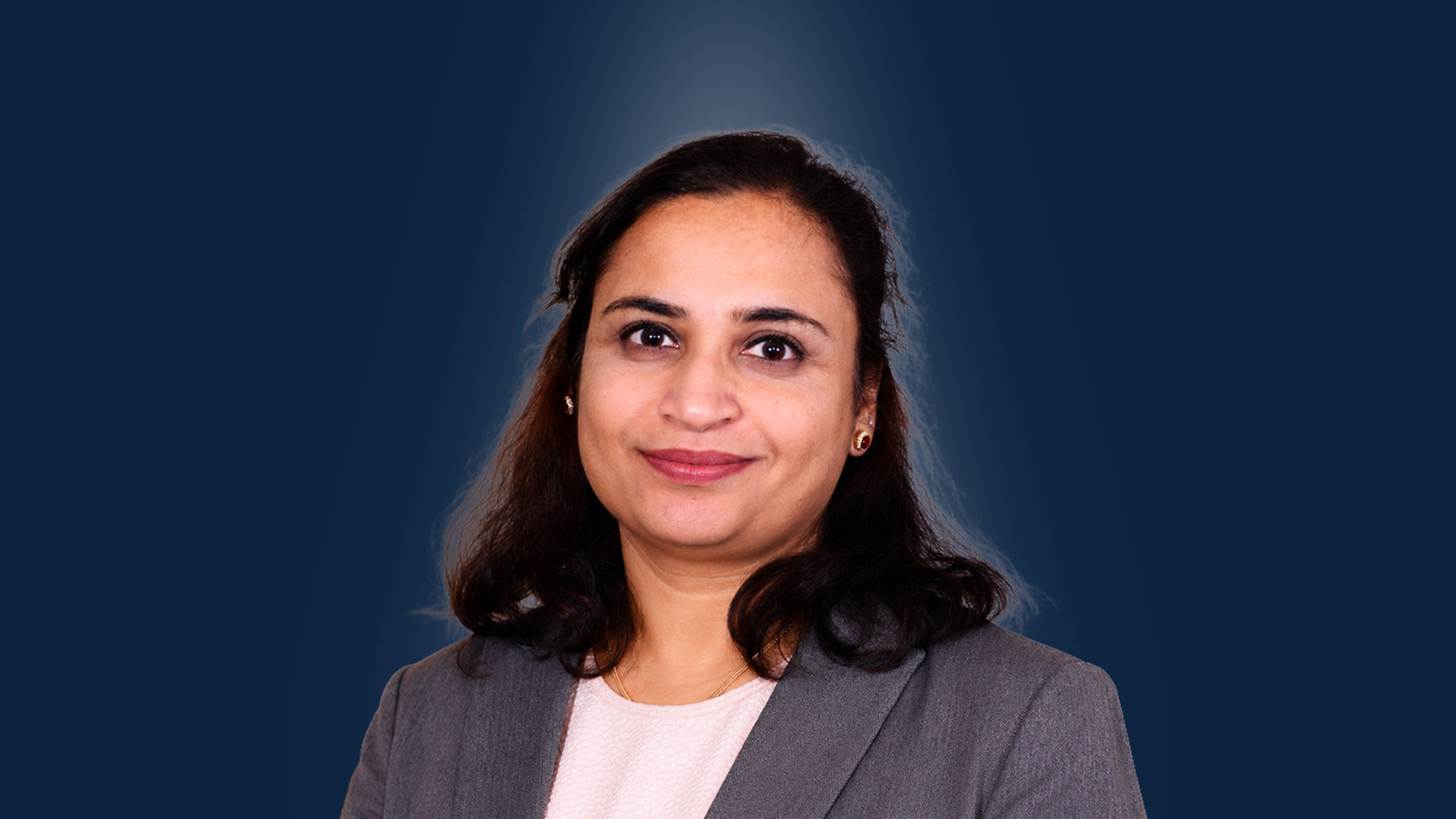
ketteCrew Spotlight: Building the Foundation with Mangala Gopalakrishna


Most people join a company after its story is already underway.
Very few have the opportunity to help build it from the very beginning.
That is why I was excited to sit down with Mangala Gopalakrishna, Senior Director of SFDC Solutions at ketteQ, for the latest edition of our ketteCrew Spotlight series. Mangala was one of the company's earliest employees and has spent more than eight years helping shape both our Salesforce platform and the way we deliver solutions to customers.
Today, she leads the development and delivery of ketteQ's Salesforce applications, working closely with product management, engineering, customer success, and customers to ensure every solution is scalable, reliable, and built to solve real business challenges. Along the way, she's watched ketteQ grow from a small startup where everyone wore multiple hats into the global company it is today.
In our conversation, Mangala reflects on the early startup days, how her role has evolved alongside the platform, why building natively on Salesforce proved to be the right decision, and what has kept her excited about coming to work every day for more than eight years.
Here is our conversation:
Q: Tell me about your role at ketteQ. What does a typical week look like as Senior Director of SFDC Solutions?
My role is centered around every Salesforce application that ketteQ builds. I oversee the delivery of our Salesforce solutions, whether it's customer-facing products or implementations that support our planning platform.
I work closely with product management, engineering, customer success, and our customers to understand their requirements and ensure we're building solutions that scale. I also spend a lot of time looking at new Salesforce capabilities and figuring out how we can use them to improve our products.
There really isn't a typical week. One day, I might be evaluating a new Salesforce release to see how it fits into our roadmap. Another day, I'm working with customers to understand new requirements or collaborating with our solution architects on implementation challenges.
Lately, we've also been exploring Salesforce's evolving Slack capabilities and how they can create a more seamless experience by connecting planning information with the tools people already use every day. Every week brings something different, and that's one of the things I enjoy most.

Q: You were one of the first employees at ketteQ. What do you remember most about those early days?
The biggest thing I remember is that everyone wore every hat possible.
I was the Scrum Master, the solution architect, the product owner, writing stories for development, helping manage the product, and doing whatever else needed to get done. When you're part of such a small team, every decision you make has a big impact on where the company is headed.
The supply chain industry was changing quickly, so we were constantly learning while building something completely new.
What really stands out, though, is the ownership everyone had. Every person cared about building the best product possible, and everyone worked together to make it happen.
That culture is still here today, and I think that's one of the things that makes ketteQ so special.
Q: You've watched ketteQ grow from a small startup into the company it is today. What are some of the biggest milestones that stand out to you?
One milestone people probably wouldn't expect was when our marketing team came on board.
Up until then, we knew what we were building internally, but once marketing started creating our branding, messaging, website, and product launches, everything suddenly felt real. It made us feel like the company we knew we were becoming.
Another milestone was building the processes that allowed us to scale.
In the beginning, everyone had access to everything because we were such a small team. Over time, we built structured development processes, testing, release management, and deployment workflows that now allow large teams to work together efficiently.
Being part of building those processes has been one of the most rewarding parts of my journey.

Q: How has your own role evolved over the past eight-plus years as both the company and the platform have matured?
When I first joined, I was very hands-on.
I was designing solutions, writing code, building the foundation of the platform, and helping wherever I was needed because that's what a startup requires.
Today, my role is much more focused on planning the product, working with customers, collaborating with my team on solution design, and making sure we're delivering the right solutions.
We've also learned so much about our customers over the years. In the beginning, we had a vision of the problems we wanted to solve. Today, we understand those challenges much more deeply because we've worked alongside customers through so many implementations.
My role has grown alongside that experience.
Q: ketteQ was built natively on Salesforce from the beginning. Looking back, why was that such an important architectural decision?
Salesforce was already a mature, highly configurable platform that so many companies were using.
We wanted customers to continue working in the environment they already knew while giving them capabilities that traditional CRM platforms couldn't provide.
Building natively on Salesforce meant customers didn't have to jump between multiple systems. Planning information, execution, and customer data could all be available in one place.
Looking back, I still believe it was the right decision because it allows us to build on a platform that continues to evolve while giving customers a seamless experience.
Q: How has Salesforce evolved over the years, and how has that opened new opportunities for supply chain planning?
Salesforce continues to innovate at an incredible pace.
Automation, integrations, AI capabilities, Agentforce, and Slack have all opened new opportunities for us to build better experiences for our customers.
Every time Salesforce introduces something new, we evaluate how we can use it to simplify our customers' work and make information more accessible.
That's one of the things I enjoy most about my role. The platform is always evolving, which means we're always finding new ways to improve what we deliver.
Q: As someone who's helped shape the platform over many releases, how do you balance introducing innovation while ensuring reliability for customers?
Every customer teaches us something.
When a customer comes to us with a new requirement, we don't just think about solving that one problem. We ask ourselves how we can build that capability into the product, so it benefits future customers as well.
At the same time, we have strong development and release processes that make sure every enhancement is thoroughly tested before it reaches production.
Innovation is important, but reliability is just as important. Our customers depend on our solutions every day, so we have to balance both.
Q: What makes building supply chain applications on Salesforce different from building on a traditional planning platform?
The audience is very different.
Planning systems are designed for planners who understand inventory, supply, demand, and all the planning scenarios behind the scenes.
Salespeople and revenue leaders don't need all of that detail.
They simply want to know whether they'll be able to fulfill an order, when products will be available, and what impact that has on their business.
Building on Salesforce allows us to deliver those answers in a way that's simple and easy to use without requiring people to become planning experts.
Q: What has kept you excited about coming to work at ketteQ for more than eight years?
The answer comes down to three things.
And the opportunity to solve new challenges every day.
Supply chain is constantly changing. There's always something new to learn, something new to build, and another challenge to solve.
Just as important is the support I receive from my teammates. Challenges don't feel overwhelming when you have people around you who are always willing to help.
That combination is what has kept me here for more than eight years.

Q: If you could go back and give yourself one piece of advice on your first day at ketteQ, what would it be?
I would tell myself to trust the leadership, trust myself, and celebrate every milestone.
When you're building something, you're always thinking about what's next. You accomplish one goal and immediately move on to the next challenge.
Looking back now, I realize how much we've accomplished over the years. I wish I had taken more time to appreciate each milestone as it happened.
Q: What's something your teammates might be surprised to learn about you?
Most people know me from the technology side, but I also have a very creative side.
I'm passionate about Kannada, my native language. I've been teaching Kannada to children in my community for more than 15 years, and I also write articles, short stories, comedy skits, and plays. I even direct performances for our local Kannada community.
It's a creative outlet that gives me a completely different perspective. Sometimes stepping away from technology allows me to come back with a fresh solution to a problem I couldn't solve before.
Final Thoughts
Talking with Mangala reinforces something that's easy to overlook when looking at a company's growth from the outside: behind every product release, every customer implementation, and every milestone is a team of people who have helped build it piece by piece.
Over the past eight years, Mangala has done exactly that. From helping lay the foundation of ketteQ's Salesforce platform to guiding its continued evolution, she's played an important role in shaping both the technology and the processes that support our customers today.
Her story also reflects something we've heard throughout this ketteCrew Spotlight series. The technology is exciting, the challenges are rewarding, but it's the people and the culture that make the journey worthwhile.
We're grateful to have Mangala as part of the ketteCrew and look forward to seeing how she continues to help shape the future of supply chain innovation.
Curious about the people behind our technology? Visit our About page to learn more about ketteQ's mission, core values, and the team helping organizations build more adaptive, intelligent supply chains.
About the author
Related articles

ketteCrew Spotlight: Embracing the Next Era of Planning with Ken Wardlaw
ketteCrew Spotlight: Embracing the Next Era of Planning with Ken Wardlaw