

What Davos Got Right About Supply Chain Risk, And What It Left Unsaid


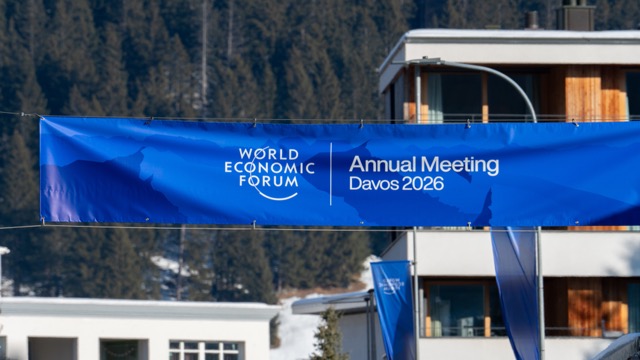
Every January, the most powerful people in global business and government gather in the Swiss Alps to talk about what keeps them up at night.
This past January, supply chain risk was at the top of that list. At the World Economic Forum in Davos, it was not framed as a niche operational topic tucked into a breakout session. It was a central, urgent, boardroom-level crisis. Leaders from more than 130 countries agreed on something that supply chain professionals have known for years: the way we source, plan, and move goods around the world is one of the most consequential vulnerabilities in the global economy.
The Forum got a lot right. But it also left the most important question completely unanswered.
What Davos Got Right
First, the Forum correctly named geopolitical risk as a permanent operating condition, not a temporary disruption to endure. Supply chain leaders at Davos were clear-eyed about this. The rules-based global trade system that most modern supply chains were engineered around is no longer reliable. Critical mineral dependencies, shifting alliances, and economic nationalism are reshaping sourcing maps in real time. Leaders described the need for resilience, flexibility, and visibility, and for once, those words landed with weight rather than as platitudes.
Second, Davos surfaced an uncomfortable structural truth: most organizations are not built to respond to the risks they can clearly see. Only 20% of companies have a geopolitical function that reports directly to business leadership. The risk is visible at the top. The organizational wiring to act on it often does not exist.
Third, and perhaps most importantly, AI emerged as the defining thread running through every supply chain conversation at Davos. Operations leaders were not especially concerned about the political firestorm raging around them. They were focused on AI, specifically on how agentic systems are beginning to deliver 20-40% reductions in human work for processes such as inventory planning, supplier negotiations, and cost scenario modeling. The optimism was grounded, not hype-driven. These leaders had been through serious disruptions before, and they believed AI was the foundation of the next era of supply chain resilience.

What Davos Left Unsaid
Here is the gap that no plenary session filled.
Davos spoke fluently about macro-level supply chain risk. It described the problem clearly and with urgency. What it did not do is tell the supply chain leader sitting in Atlanta, Amsterdam, or Singapore what to do on Monday morning.
World leaders talked about diversifying away from single-region supplier networks. They talked about securing critical minerals through new international partnerships. They discussed building resilience into the global trade architecture. These are the right conversations to be having at 3,000 feet. But supply chains do not run at 3,000 feet. They run on purchase orders, planning cycles, inventory positions, and lead times.
The gap between the Davos conversation and the daily reality of a supply chain planning team is enormous. And it is exactly that gap where most organizations are currently failing.
Knowing that geopolitical risk is a permanent operating condition does not help a planner who is still running a weekly batch process on a system that cannot model what happens if their primary supplier in a high-risk region goes dark for 30 days. Understanding that AI is transforming supply chain operations does not help an operations leader whose planning tool has not changed materially in a decade.
Davos identified the destination. It did not provide the map.
The Bridge Between the Summit and the Planning System
The answer Davos did not articulate is one that supply chain technology leaders have been building toward for years. Resilience is not a strategy. It is a capability. And it is built not in conference rooms but into the planning systems that run your business every day.
Real resilience requires the ability to model disruption scenarios before they occur, to continuously monitor supply network conditions, and to act on signals quickly enough to matter. That is not possible with planning systems that run on weekly cycles and require a team of analysts to build a new scenario from scratch whenever the news changes.
At ketteQ, this is the problem we exist to solve. Our PolymatiQ™ agentic AI solver does not wait to be triggered. It runs continuously across demand, supply, inventory, and customer commitments, surfacing risks and recommended actions in real time. When a geopolitical signal shifts the risk profile of a supplier region, the system models the downstream impact and identifies response options before the disruption reaches your operations.
Deployments are delivering results consistent with what Davos operations leaders described: significant reductions in planning effort, faster scenario modeling, and supply networks that can absorb shocks without catastrophic failure. ketteQ customer, Partner in Pet Food (PPF), achieved 13% higher capacity utilization and millions in annual cost savings within weeks of deployment, not by replacing their planning infrastructure, but by adding intelligence that continuously operates on top of it.

Resilience Is Built Here, not in Davos
The conversations in the Swiss Alps matter. When heads of state and global CEOs agree that supply chain risk is a civilizational priority, it changes the urgency of the conversation inside every boardroom and every operations team.
But resilience is not built at altitude. It is built into the systems that plan your supply chain every day, whether those systems can see risk coming, model its impact, and help your team act before the disruption arrives.
The World Economic Forum asked the right questions. The answers are in your planning infrastructure. The question is whether yours is ready to provide them.
About the author
Related articles

ketteCrew Spotlight: Embracing the Next Era of Planning with Ken Wardlaw
ketteCrew Spotlight: Embracing the Next Era of Planning with Ken Wardlaw