

Leading Through the AI Revolution: Insights from ketteQuest 2026


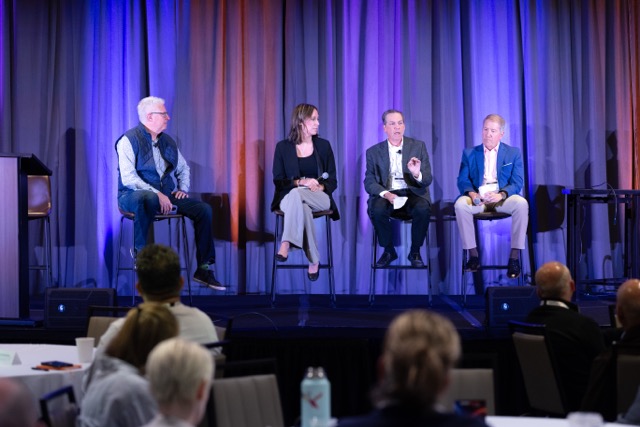
I had the privilege of sitting in the audience during one of the most candid and interactive sessions at ketteQuest this year - the Executive Advisory Board Vision Panel, moderated by Rick McDonald alongside fellow EAB members Kristen LeBaron, Frank Borovsky, and Gary Bobb. The conversation cut straight to what most conference panels avoid: the human side of navigating a world being reshaped by agentic AI.
The panel kept returning to a central truth - technology is the easy part. Here's what I took away.
Change Management Is Not an Afterthought - It's the Work
Rick McDonald set the tone early: change management is one of the most underinvested capabilities he's seen throughout his career. "Most people focus on tools and technology," he said.
"It's really the upskilling, reskilling, the leadership mindset, and the change management that matters the most."
Frank Borovsky was even more direct: too many organizations treat change management as training, and worse, as something that happens after the project is done. "Change management starts before the project even begins. It's about changing the mindset of the organization, and it starts at the top."
His three-cohort framework was practical and resonant: every transformation has high achievers ready to go, laggards who must be coached up or out, and the critical "wait and sees" in the middle - who are watching how leadership handles the resistors. Miss that middle group and the transformation stalls.
Kristen LeBaron grounded it operationally: know your target operating model, map the gap, and communicate at the individual level. "How is your life changing as a result of this?" needs an answer before deployment day, not after.
Leading Under Pressure
Kristen's advice for high-stakes moments was crisp: stay composed, communicate relentlessly, narrow priorities to two or three things, and give your team permission to set the rest aside. "Ambiguity creates pressure, pressure creates fear. Just being decisive in setting expectations is often the most powerful thing a leader can do."
Rick drew from firsthand experience running the Clorox supply chain during COVID - 9,000 employees, five continents, and 24 countries. His lesson: relationship capital is built before the crisis, not during it. "We didn't have time to get to know each other and decide whether we could trust each other." Don't wait.
Frank added a practical note: do lessons learned during the project, not at the end. "If something goes awry, do the lessons learned then. Don't wait until the end of the project, because it's too late."

Innovation Requires Intentional Space
Gary Bobb was candid: "You've gotta be purposeful about innovation. You've gotta make time and space and breathe for that." His solution was to build formal incubation models - because you can't ask a team already grinding through a complex deployment to also innovate spontaneously.
Rick made the cultural case: it's not about being the smartest person in the room; it's about making it safe to be wrong. "I've had people say, 'Rick, you've said some dumb things, but that's the dumbest you've ever said.' And you accept that. That's authentic leadership."
Frank's practical advice: stop treating vendor conversations as sales calls.
"They're telling you how other people are trying to solve similar problems. Think of it as an opportunity to learn."
What Would You Have Done Differently?
When an audience member asked the panel to imagine having today's AI-powered tools ten years earlier, the answers were telling.
Frank recalled building an entire data analytics department at Honeywell - data scientists, Snowflake, Tableau, custom models - just to approximate what ketteQ delivers out of the box today. "I would probably not have had to build a whole department to do exactly what it can do better now."
Rick reflected on Clorox's global supply chain complexity: better demand signal accuracy would have meant less inventory, a stronger balance sheet, and fewer service failures. "I'd have a lot more confidence in that forecast."
Gary's answer came from the service world: real-time communication to customers on parts availability and technician status required enormous manual effort. "Just go faster with technology and change. There was always this, 'well, what about this?' Just go do it."

Choosing the Right Partner
The panel was unified: you're not choosing a brand; you're choosing the people.
Frank described a clause in vendor contracts that he insisted on throughout his career - the right to personally interview every team member, with unconditional right of refusal. "I want to be with the partner who's going to be there at 2 o'clock on Sunday morning with pizza and Mountain Dew when the thing's collapsing."
Gary explained why his team chose ketteQ at Carrier: cultural fit.
"I could feel a cultural match. The culture built with that team, the culture I was trying to build with my team - it was a really good match."
Rick offered a useful diagnostic: ask whether a partner will tell you what you want to hear or what you need to hear. Too many vendors "mow, blow, and go" after the sale. The right partner treats your implementation like their own.
What made this panel exceptional was the consistency of the message across four very different careers. Transformation is a team sport. Pressure reveals the relationships you built before it arrived. Innovation needs intentional space. And the partner you choose is really just the team you choose.
My thanks to Rick, Kristen, Frank, and Gary for a session that was as practical as it was energizing.
About the author
Related articles

ketteCrew Spotlight: Embracing the Next Era of Planning with Ken Wardlaw
ketteCrew Spotlight: Embracing the Next Era of Planning with Ken Wardlaw